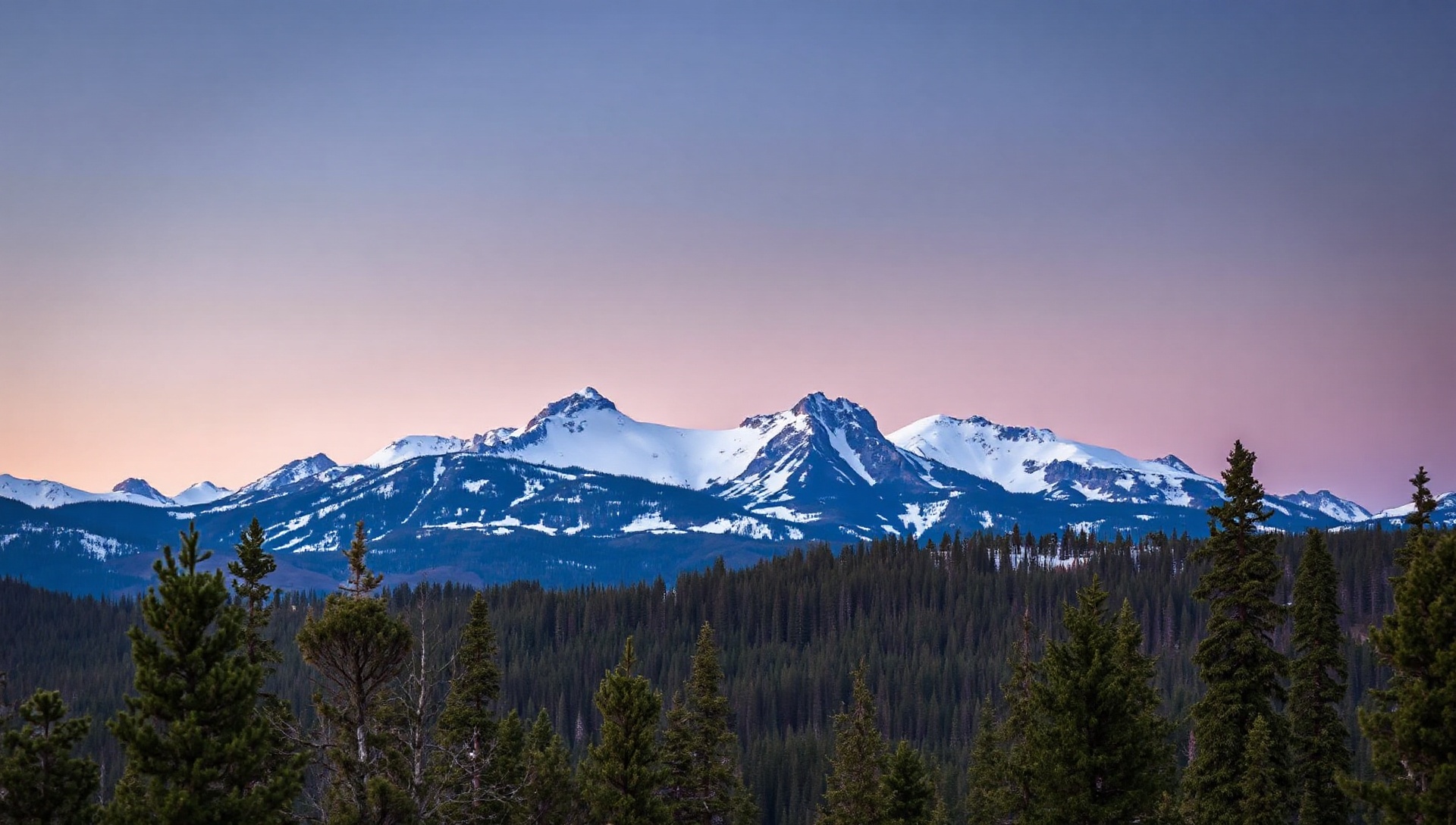
A winter elopement in Colorado gets you things summer cannot: empty trailheads, snow on every branch, permit calendars with open dates, and photos that look nothing like everyone else’s. It also asks more of your planning. Some of the most famous roads close for months, a few ceremony sites only exist in winter, and the light is gone by late afternoon. Here is what changes between roughly mid October and late May, checked against the agencies that set the rules.
Which roads close for winter
Start here, because a closed road can erase a location from your list.
| Road or area | Winter status | Source |
|---|---|---|
| Trail Ridge Road (U.S. 34 in Rocky Mountain National Park) | Closed from approximately mid October through late May | Park Service |
| Independence Pass (CO 82 east of Aspen) | Closes around Nov. 7; typically reopens the Thursday before Memorial Day | CDOT |
| Kebler Pass (near Crested Butte) | Typically closed from November to May | CDOT, maintained by Gunnison County |
| Maroon Creek Road to the Maroon Bells | Open to cars from May 15 to early November | Maroon Bells reservation site |
| Loveland Pass (U.S. 6) | Open in winter, but closes in storms and for avalanche work | CDOT |
All of these dates move with the weather. CDOT says plainly that closing and opening dates are subject to change, so check COtrip.org the morning of your ceremony.
What it means in practice. With Independence Pass closed, Aspen from Denver means westbound I-70 to Glenwood Springs and then south on CO 82, which CDOT says adds a few hours. In Rocky Mountain National Park, the high tundra is off limits by car, but the east side stays open. At the Maroon Bells, the road closes to cars once winter sets in; a winter ceremony there means a long trip over snow, so read our Maroon Bells permit guide and call the Aspen Sopris Ranger District before you plan one.
Loveland Pass deserves a note. It stays open through winter and is a favorite for snowy Continental Divide photos, but it is also the route for hazardous materials trucks that are not allowed through the Eisenhower Johnson tunnels, and CDOT escorts those trucks through the tunnel only when the pass is closed. Expect truck traffic, narrow pullouts and storm closures, and have a backup spot lower down.
Rocky Mountain National Park in winter
The park is one of the best winter elopement locations in the state, and its rules shift in your favor. The Park Service sets summer site limits from the Friday of Memorial Day weekend through the second Monday in October; winter is the rest of the year. The monthly cap also changes: 60 ceremonies a month from May through October, 40 from November through April.
Three things change for winter couples:
- Bear Lake opens. It is a winter only wedding site, up to 20 people and 5 vehicles, and the park does not permit weddings there on weekends.
- Sprague Lake grows. Its limit goes from 15 people and 3 vehicles in summer to 30 people and 10 vehicles in winter.
- Timber Creek closes. The west side amphitheater is closed in winter.
The park’s own wedding page leads with a photo of a ceremony at 3M Curve in winter. That site holds 15 people and 3 vehicles, has no restrooms, and the Park Service shows its parking area covered in snow before plowing, so build in time. Every ceremony still needs the $300 special use permit, applied for up to a year ahead; our RMNP wedding permit guide walks through it.
Sapphire Point and Summit County
The Forest Service lists Sapphire Point Overlook as a year round site, and the Sapphire Point guide covers the reservation. In winter the Forest Service warns that the path to the overlook is not maintained, so expect ice and unstable footing. Recreation.gov says the same and asks guests to dress for the weather and wear proper footwear. Check the Recreation.gov calendar for the winter blocks you want before you plan around them.
Summit County is the easiest winter base: I-70 access, Frisco and Breckenridge for lodging, and resort decks if the weather turns. The Summit County guide has the full picture.
Ski resort ceremonies
Several Colorado ski resorts host ceremonies on the mountain, at a summit lodge, or on a deck reached by gondola or chairlift. Each resort sets its own rules. Expect a resort event agreement or permit, lift or scenic ride tickets for every guest, and a set ceremony window that works around skiers. Ask the resort’s wedding or group sales office directly. Our Vail wedding venues, Aspen wedding venues and Colorado mountain wedding venues pages list places with indoor backup, which matters more in January than in July.
The traction law and winter driving
CDOT can put the Passenger Vehicle Traction Law into effect on any state highway when conditions require it. During a traction law every vehicle needs one of these:
- all wheel or four wheel drive with mud and snow or winter rated tires (the mountain snowflake icon or M+S) and at least 3/16 inch tread
- all wheel or four wheel drive with tires the manufacturer rates as all weather, same tread depth
- chains or an approved alternative traction device
In severe storms CDOT moves to the chain law, which requires chains or an approved device on every vehicle; it is the last step before closing the road. The fine for ignoring either is $100 plus a $33 surcharge, and $500 plus a $157 surcharge if your car blocks a lane and causes a closure. If you are renting, look at the tires before you leave the lot.
Short days: build the timeline around the light
In Denver the U.S. Naval Observatory puts sunrise at 7:18 a.m. and sunset at 4:39 p.m. on Dec. 21, 2026, with civil twilight ending at 5:09 p.m. Treat those times as approximate in the mountains, where ridges block the sun well before the official sunset and valley floors can sit in shade for much of the day.
A winter day that works:
- Midday ceremony. Late morning to early afternoon is the warmest part of the day and gives your photographer bright, even light on snow.
- Portraits from about 3 p.m. The low sun is soft and golden for a short window. Do not schedule the ceremony itself at sunset in December; by the time vows are done the light is gone.
Our Colorado elopement timeline has sample days for each season.
What to pack
- Warm layers under the outfit. Thermal base layers, a long coat or blanket wrap for between shots, and a warm jacket for every guest.
- Hand and toe warmers. Cheap, small and the single most useful item in the bag.
- Boots for the walk. Change into dress shoes at the spot. Traction devices for icy paths like Sapphire Point.
- Spare batteries. Cold drains phone and camera batteries fast. Keep spares in an inside pocket.
- Snowshoes, if you want deep snow. Many winter photos happen a short snowshoe from a plowed trailhead. On most national forest land a small ceremony needs no permit; see national forest and BLM elopements.
Plan it
Pick the location first, then confirm it is reachable in your month. Book the permit, then the photographer, then lodging. Browse Colorado photographers who shoot in snow, or Summit County vendors if you are basing near Breckenridge, and keep your dates and permits together in the free planner.
Related reading: our Vail elopement guide.